
Production of Brass Parts
SABNER manufactures small precision parts made of brass in series using CNC turning from bar stock, based on the customer’s technical documentation. We specialize in B2B projects requiring repeatable production of parts with diameters ranging from Ø0.5-12 mm and lengths ranging from 1-150 mm.
Our core focus is on projects with demand starting at approximately 10,000 pieces per year per component. We analyze each part individually in terms of geometry, material, quality requirements, and the feasibility of stable series production.
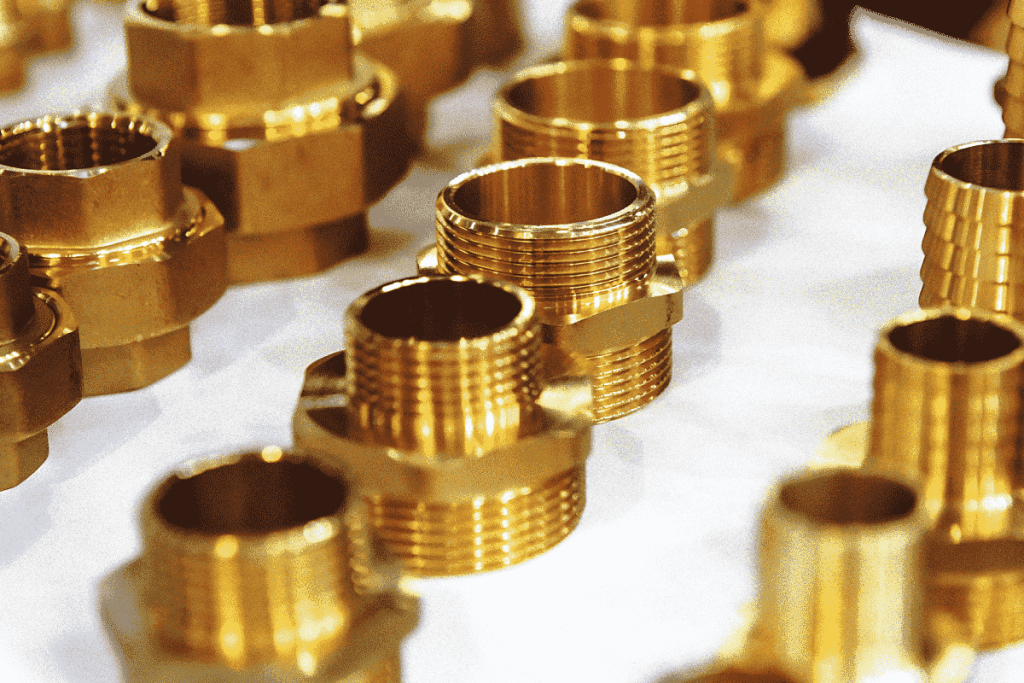
Scope of Series Production of Brass Parts
Brass part production at SABNER is focused on small turned parts made from bar stock, manufactured repeatably across successive batches. This production profile allows us to focus the process on parts where small dimensions, geometric stability, repeatability, and compliance with customer documentation are critical.
The basic production range covers diameters from Ø0.5 mm to Ø12 mm and lengths from 1 mm to 150 mm. These values describe SABNER’s typical area of specialization; however, mere compliance with this range does not in itself determine feasibility. Other important factors include the part’s shape, the length-to-diameter ratio, the type of threads and holes, surface finish requirements, tolerances, and the specific material grade.
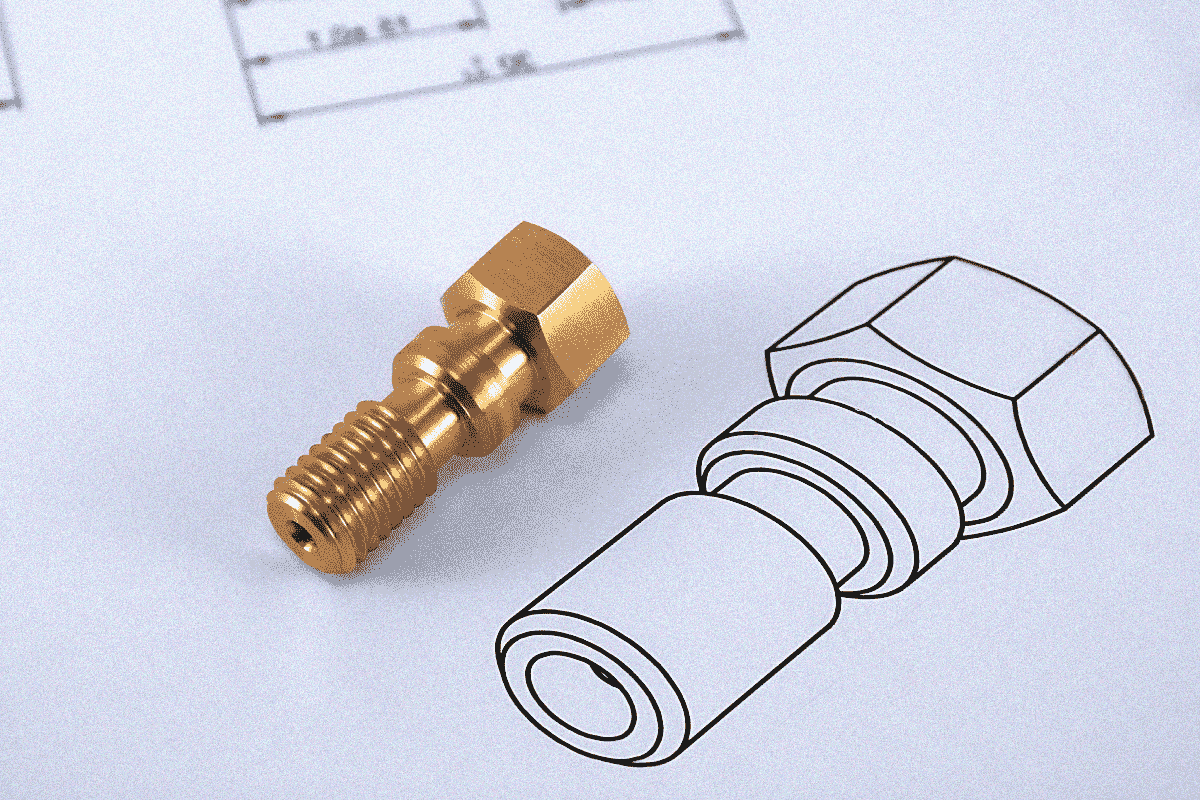
We carry out production according to the customer’s documentation. The starting point may be a 2D technical drawing, a 3D model, an agreed-upon specification, or an approved sample. Based on this, we can assess the manufacturing method, critical requirements, and the inspection method. We do not apply a single universal tolerance to all parts – requirements must be defined for each specific project.
SABNER focuses primarily on series and recurring projects. We typically work with demand starting at approximately 10,000 pieces per year per component. Deliveries can be arranged in batches according to the agreed cooperation model, while single pieces or small batches are mainly justified when they serve as a validation phase before subsequent series production.
What brass parts do we manufacture?
SABNER primarily manufactures small technical brass parts whose geometry is suitable for CNC bar turning. This is not a catalog of standard products – each component is manufactured according to the documentation and requirements of a specific project.
Typical geometries include bushings, threaded bushings, pins, metal inserts, threaded elements, fittings, and other small axial components. Depending on the part, the process may include, among other things, the production of threads, holes, grooves, chamfers, undercuts, and other features that can be reliably produced through the bar turning process.
These types of components may be used for further assembly in devices, connectors, hydraulic systems and pneumatic systems, electronics, automation, and other industrial applications. For SABNER, however, more important than the industry itself is the part’s compliance with the manufacturing profile and the ability to maintain consistent requirements across subsequent batches.
If the manufacturing process for a part has not yet been finalized, the documentation allows us to assess whether it can be effectively produced as a turned part. As a result, the decision is not based solely on the component’s name, but on its actual geometry, material, and functional requirements.
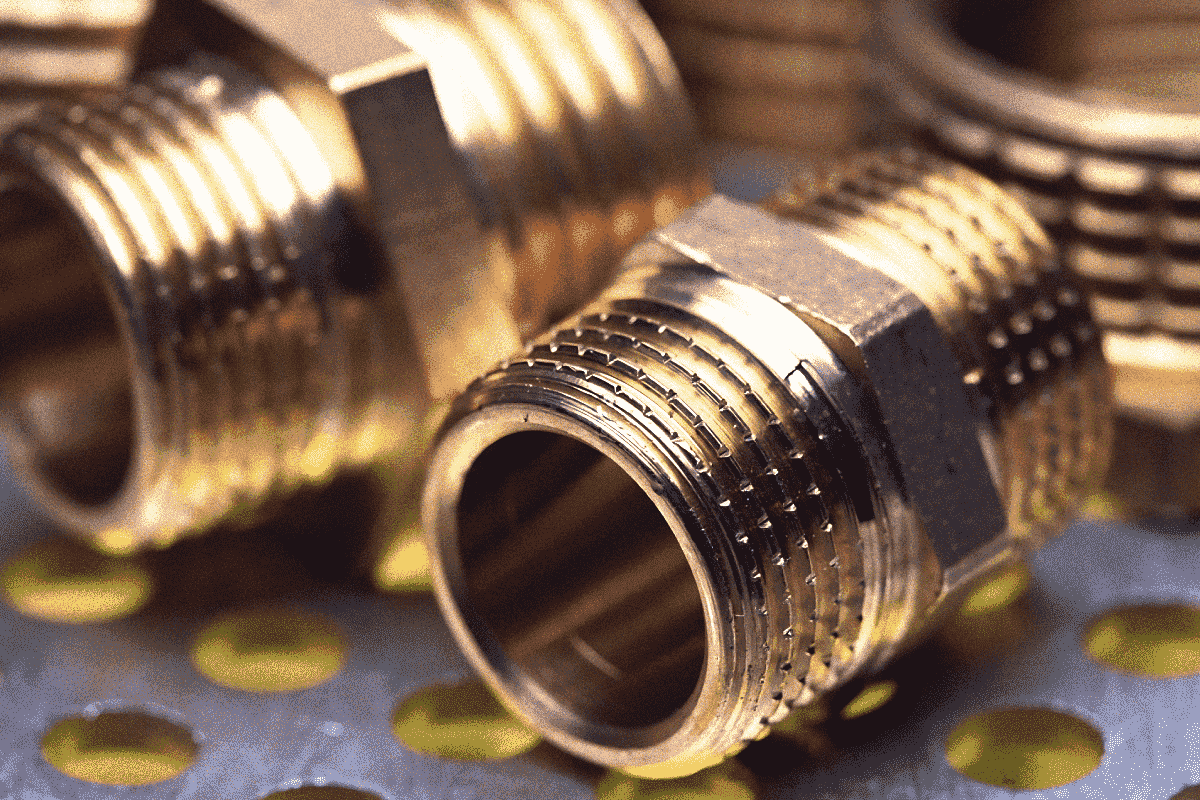
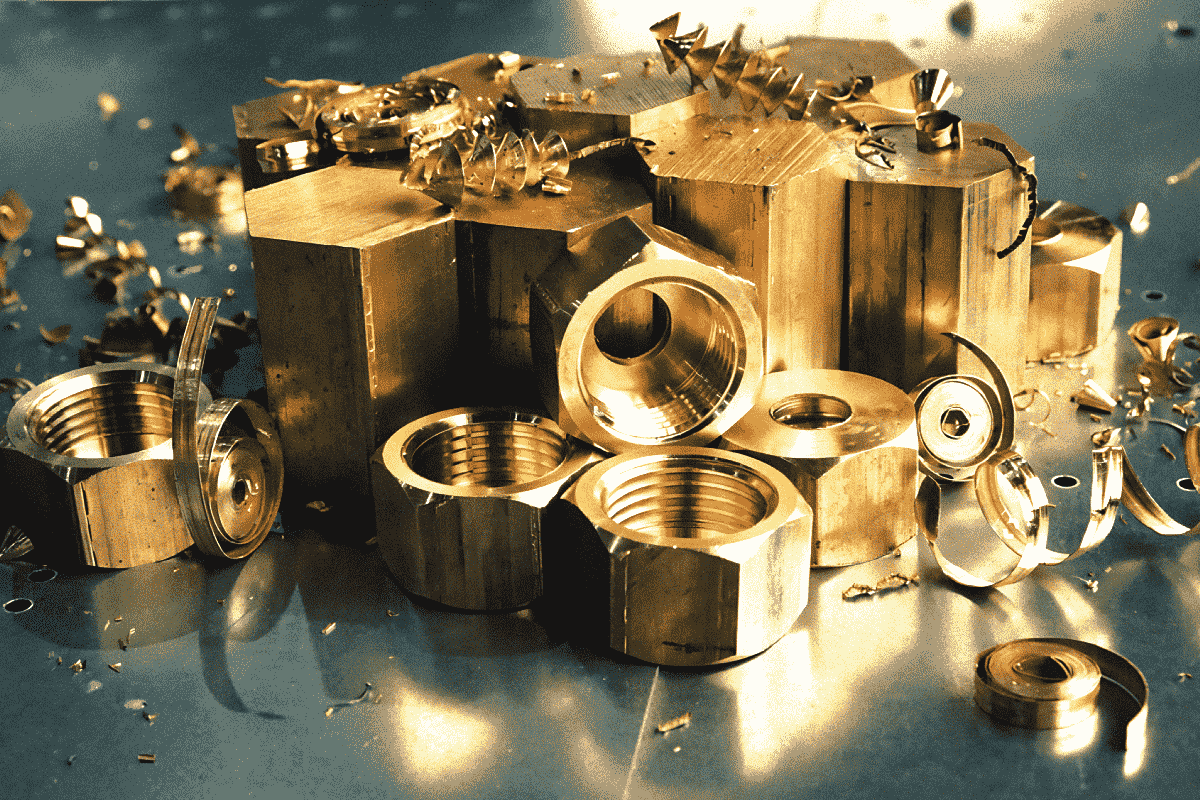
Brass in CNC Turning for Series Production
Brass is a material frequently used for the production of small machined parts, but its machinability depends on the specific alloy grade. For this reason, the material should not be treated as a single, homogeneous group with identical behavior during machining.
Selected brass grades intended specifically for machining offer favorable machinability and can perform well in CNC turning for series production. For the manufacturer, this supports the ability to establish a stable process; however, machining parameters, tooling, and inspection methods must always be tailored to the specific alloy and part geometry.
When selecting a material, it is not only the production process itself that matters. The brass grade should meet the functional requirements of the part as specified in the documentation, such as those regarding the operating environment, mechanical properties, surface finish, or subsequent assembly. If the material has been defined by the designer, SABNER evaluates the project using the specified grade. If the documentation requires clarification, the material should be agreed upon before the project requirements are finalized.
We do not provide a single list of grades on our website that are universally available for every project. The feasibility of using a specific material must be confirmed during the inquiry analysis stage, along with the geometry, quality requirements, and planned volume.
From Documentation to Series Production of Parts
A brass parts production project begins with an analysis of the documentation and a feasibility assessment. We review the basic input data, geometry, material, critical requirements, and planned volume. The goal of this stage is to determine whether the part fits SABNER’s production profile and what assumptions must be made before preparing the process.
Once the project is approved, the manufacturing requirements are clarified and organized and the production process is prepared. This includes, among other things, determining the sequence of operations, the necessary resources, and the inspection method for dimensions and features critical to the part’s function. As a result, production is not based solely on machine setup but on an agreed set of requirements and inspection criteria.
Before moving to series production, the first part (First-Off) is produced and subjected to measurement and evaluation. If the project requires additional validation, samples or a validation batch may be produced to verify assembly, function, or compliance before regular deliveries begin. This stage is part of implementing a series production project, not a separate single-unit manufacturing service.
Once the launch is approved, series production begins. Inspections are conducted according to the established plan, and the finished batch undergoes a final inspection before release for packaging and shipment. For subsequent orders, the agreed-upon documentation and project requirements serve as the reference point.
Quality Control in the Series Production of Brass Parts
Quality control is planned for a specific part and its requirements, rather than according to a single template for all parts. Critical dimensions and characteristics are derived from the customer’s documentation, and the inspection method during process launch and series production is determined on this basis.
The process includes incoming material inspection, verification of the first part (First-Off), in-process inspections, and final batch inspection. If the first part does not meet the agreed requirements, the process is corrected before release to series production. This helps minimize the risk of continuing production with incorrect settings.
During production, measurements are performed in accordance with an inspection plan tailored to the part’s characteristics. The scope of quality documentation and additional requirements may vary between projects and should therefore be specified during the inquiry and technical consultation phase.
SABNER maintains a quality management system compliant with ISO 9001:2015 and an environmental management system compliant with ISO 14001:2015. These certifications support a structured approach to processes, but the final acceptance criteria for a specific part are always based on the documentation and agreements for that particular project.
What Should You Submit to Evaluate Brass Parts Production?
The best basis for evaluating a project is a 2D technical drawing and, if available, a 3D model. The documentation should clearly convey the part’s geometry, material, and requirements relevant to its function.
It is also advisable to include the planned annual demand and information about the expected delivery method with your inquiry. If the project includes critical dimensions, requirements regarding surface finish, threads, material, inspection, or additional operations, these should be specified in the documentation. This allows us to evaluate the project without basing the quote on assumptions.
If not all data is available yet, you can submit the materials you have for preliminary evaluation. SABNER will assess what information is missing for further analysis. For a project leading to series production, a sample can also be used as one of the input references, but the final requirements should be clarified and agreed before series production begins.
Frequently Asked Questions About Brass Parts Manufacturing
What Is the Minimum Annual Demand?
SABNER focuses on series and recurring projects, typically starting at approximately 10,000 pieces per year per component. The size of a single shipment can be determined within the framework of a specific cooperation model. Small batches or samples are primarily produced when they serve as a step leading to subsequent series production.
What files can I submit for a quote?
It is best to submit a 2D technical drawing and, if available, a 3D model. Information about the material, planned volume, and requirements relevant to the part’s function is also needed for evaluation. The more precise the input data, the more accurately the project’s feasibility can be assessed.
Is It Possible to Produce Samples Before Starting Full Series Production?
Yes, samples or a validation batch can be part of implementing a series production project if they are needed to confirm geometry, assembly, function, or other requirements prior to regular production. However, SABNER does not treat the production of single units and short runs as a separate target production model.
How is the quality of the manufactured parts controlled?
Quality control is planned based on the documentation and critical characteristics of the specific part. The process includes incoming material inspection, measurement of the first part (First-Off), in-process inspections, and final batch inspection. The detailed scope of documentation and measurements is agreed according to the project requirements.
Submit documentation for brass parts
If the project involves series production of small brass parts, please submit technical documentation and information about your planned demand. Based on this, SABNER can assess the suitability of the geometry, material, and requirements for the CNC bar turning process.