Production of Small Precision Metal Parts

SABNER provides series production of small precision metal parts from bar stock using CNC turning. We carry out projects according to customer documentation and requirements, with diameters ranging from Ø0.5–12 mm and lengths from 1–150 mm, with a minimum annual demand of 10,000 pieces per year per component. This offer is intended for B2B customers who need repeatable production of small parts, a stable quality process, and regular deliveries. We assess each project individually in terms of geometry, material, quality requirements, and planned volume.

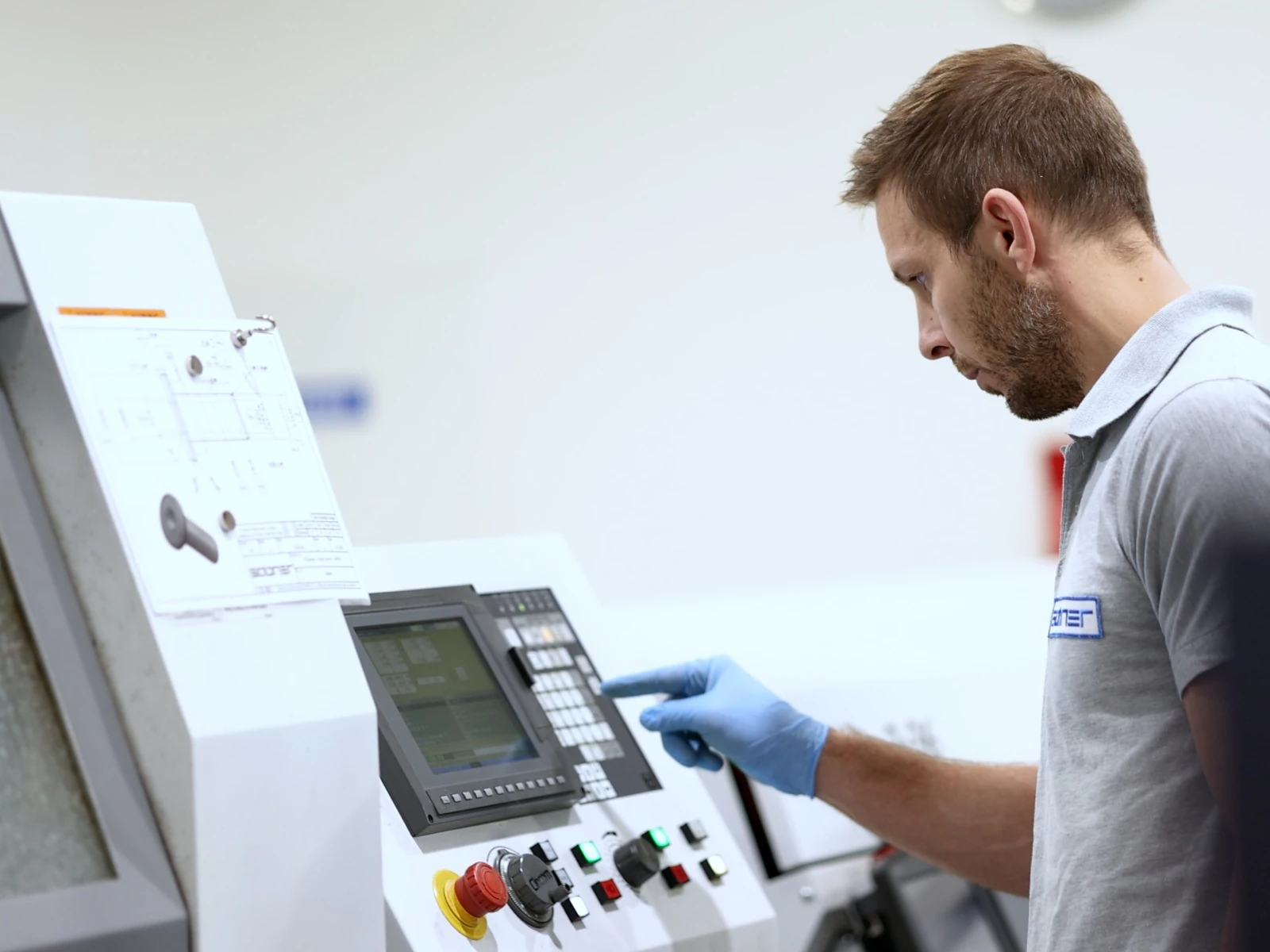
SABNER operator during production of small precision metal parts
01Ø0.5–12 mm
02Length 1–150 mm
03Minimum 10,000 pieces per year per component
04Production based on customer documentation

What metal parts do we manufacture?

We focus on small precision metal parts custom-made from bar stock. These are primarily axial, assembly, fastening, and technical components intended for B2B series-production projects. Parts are manufactured based on customer documentation; therefore, we do not work from a single catalog of off-the-shelf products – each geometry is evaluated individually in terms of manufacturability, material, required quality, and the cost-effectiveness of production at the planned volume.

Typical groups of parts include, among others, bushings, plug pins, pins, shafts, threaded bushings, inserts, fittings, and other small components with geometries suitable for bar turning. This list is illustrative – SABNER also manufactures special parts designed for specific applications, provided their geometry, material, and batch size align with our production profile.
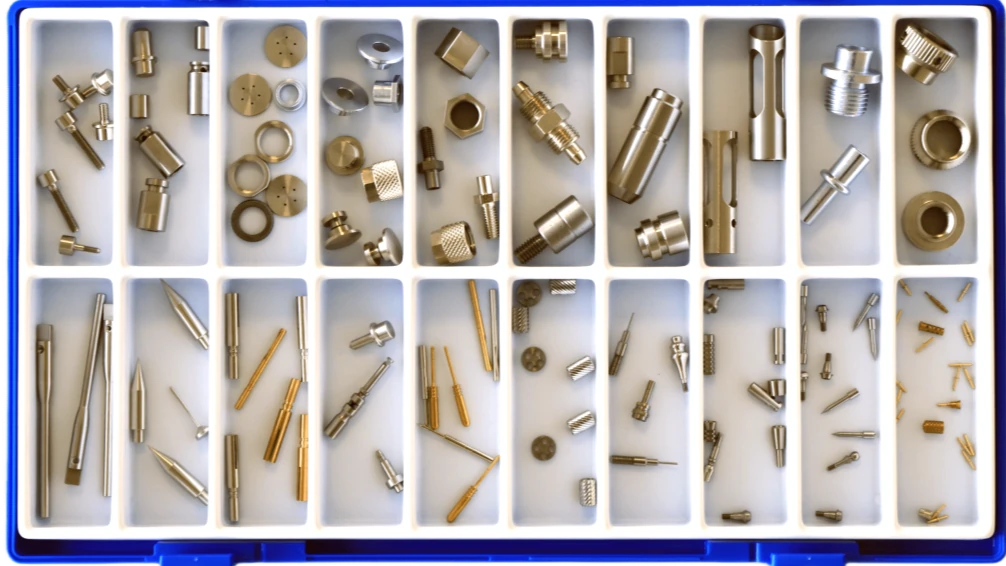
Small precision metal parts manufactured by SABNER

Small Precision Parts and Micro-Parts

SABNER specializes in small parts, including micro-parts requiring repeatable series production. In practice, these may include very small assembly components as well as small bushings, pins, inserts, shafts, or threaded components. What they have in common is the need for stable production of a large number of identical parts in accordance with the documentation, with dimensional and quality control throughout the process.

Custom Fasteners Manufactured to Customer Documentation

If you need a small custom fastener that cannot be selected from a standard catalog, SABNER can evaluate the feasibility of series production on CNC automatic lathes. This includes, among other things, special sleeves, threaded bushings, inserts, plug pins, shafts, pivot pins, and other components manufactured according to customer drawings or specifications. Such projects are particularly justified when a part has a non-standard shape, dimensions, or requirements that are not covered by the catalog offering.

Production is based on CNC bar turning; therefore, before preparing a quote, we analyze the documentation, material, geometry, and planned volume. This allows us to assess whether a given non-standard component can be manufactured using a stable and repeatable series-production process and then delivered in batches according to the agreed-upon project schedule.

When is a project a good fit for production at SABNER?

A project is best suited to SABNER’s production model when it involves series or recurring production of a small metal part that can be made from bar stock using CNC turning. The basis for our assessment is the technical documentation and information about the planned demand. It is advisable to provide the material, key quality requirements, and expected volume with the initial inquiry, as this information affects process selection, the inspection approach, and our ability to prepare a reliable quotation.

  • the part diameter is within the range of Ø0.5–12 mm,
  • the part length is within the range of 1–150 mm,
  • the project is intended for series production, with a demand of at least 10,000 pieces per year per component,
  • the part is to be manufactured from bar stock using CNC turning,
  • documentation or an agreed-upon specification is available to assess the project requirements.

Meeting these conditions does not automatically mean the project will be accepted. Final feasibility is confirmed after reviewing the geometry, material, and quality requirements.

How do we manufacture small precision parts?

The core of our production is precision CNC turning for series production from bar stock. This technology enables repeatable production of small parts with geometries suitable for turning, with controlled process conditions and repeatability across successive batches. Depending on the part, we can produce threads, holes, grooves, end faces, and other features achievable through the CNC turning process.

For small parts with small diameters, we also use CNC sliding-headstock lathes. Swiss-type machines are designed for the efficient production of small components from bar stock and are well-suited for projects where compact dimensions, repeatability, and long-term series production are essential. The specific machine and manufacturing method are selected based on a technological assessment of the part.
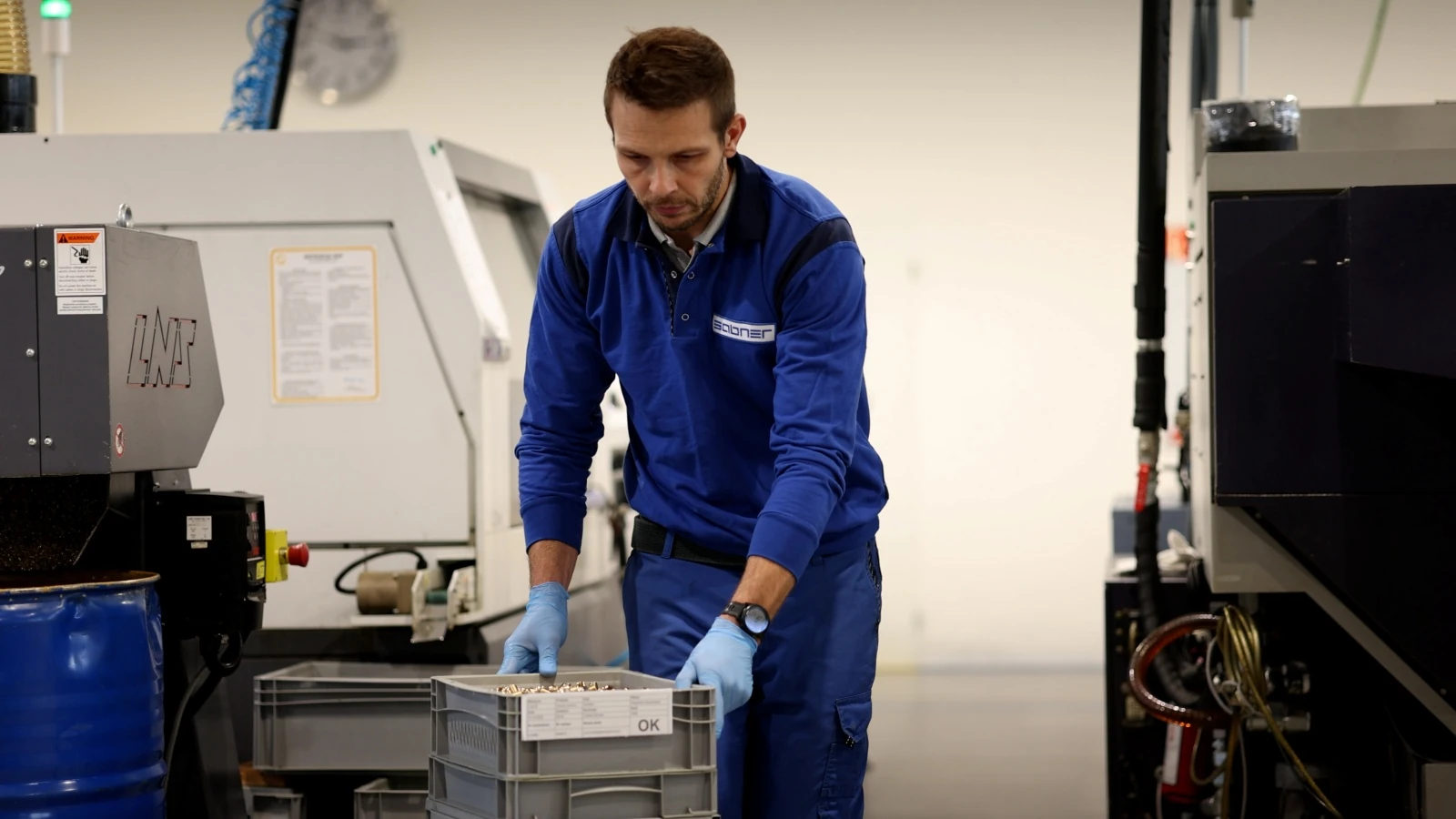
SABNER operator at a CNC machine for small metal parts production

From Documentation to Series Production

Project implementation proceeds in stages. The goal is to clarify requirements before series production begins, verify feasibility, and prepare a process that can be repeated reliably across subsequent batches. The scope of each step depends on the part’s complexity, material, quality requirements, and the agreed delivery method.

01

Inquiry and Qualification – SABNER receives the documentation and basic information about demand, material, and quality requirements. The project is preliminarily assessed for fit with our production capabilities, geometry that can be manufactured from bar stock, and the required volume.

02

Feasibility Analysis – Technical requirements, geometry, material, tolerances, critical features, and potential process risks are reviewed. Based on this, the assumptions needed to prepare a technical and commercial quotation are established.

03

Clarification of Requirements – Once the project is accepted, critical requirements, production documentation, packaging and delivery methods, and the inspection approach are finalized. The agreed data form the basis for preparing the production process.

04

Process Preparation and First-Off – Once the production setup is prepared, the first part is manufactured and inspected. At this stage, key requirements can be confirmed before full series production begins. If the project requires broader validation, the process may include samples or a validation batch.

05

Series Production – Once the process is approved, series production begins. In-process inspections are carried out according to the established plan to maintain conformity of subsequent parts and batches with the approved requirements.

06

Final Inspection and Delivery – The finished batch undergoes final verification, is released after quality approval, packaged, and prepared for shipment in accordance with project requirements. The required quality documentation is prepared to the extent agreed with the customer.

If the project requires confirmation of the part or process before full production launch, the order may include validation samples before series production. This stage provides a practical verification of the agreed geometry, material, critical features, and inspection method before moving to regular production. It is part of the implementation of a series-production project, allowing both parties to confirm the agreed assumptions before launching the target production volume.

What materials can be used to manufacture parts?

In the series production of small turned parts, SABNER works with a broad range of metals selected to suit the part’s function and project requirements. The most commonly machined materials include stainless steels, titanium, and brass. Depending on the project, we also evaluate aluminum, free-cutting and structural steels, as well as selected specialty materials. We always confirm the suitability of a specific material for the specified geometry, quality requirements, and planned production volume.

Examples of grades used in SABNER projects include, among others, stainless steels 1.4301, 1.4305, 1.4404, and 1.4571, titanium TiAl6V4, brass CuZn39Pb3 and CuZn40, aluminum from the AlMgSi group, free-cutting and structural steels such as 11SMnPb30 and 42CrMo4, as well as selected specialty materials, e.g., Inconel 718 and Inconel 625.

This list is not exhaustive – before providing a quote, we verify the material’s availability and its suitability for a specific part.
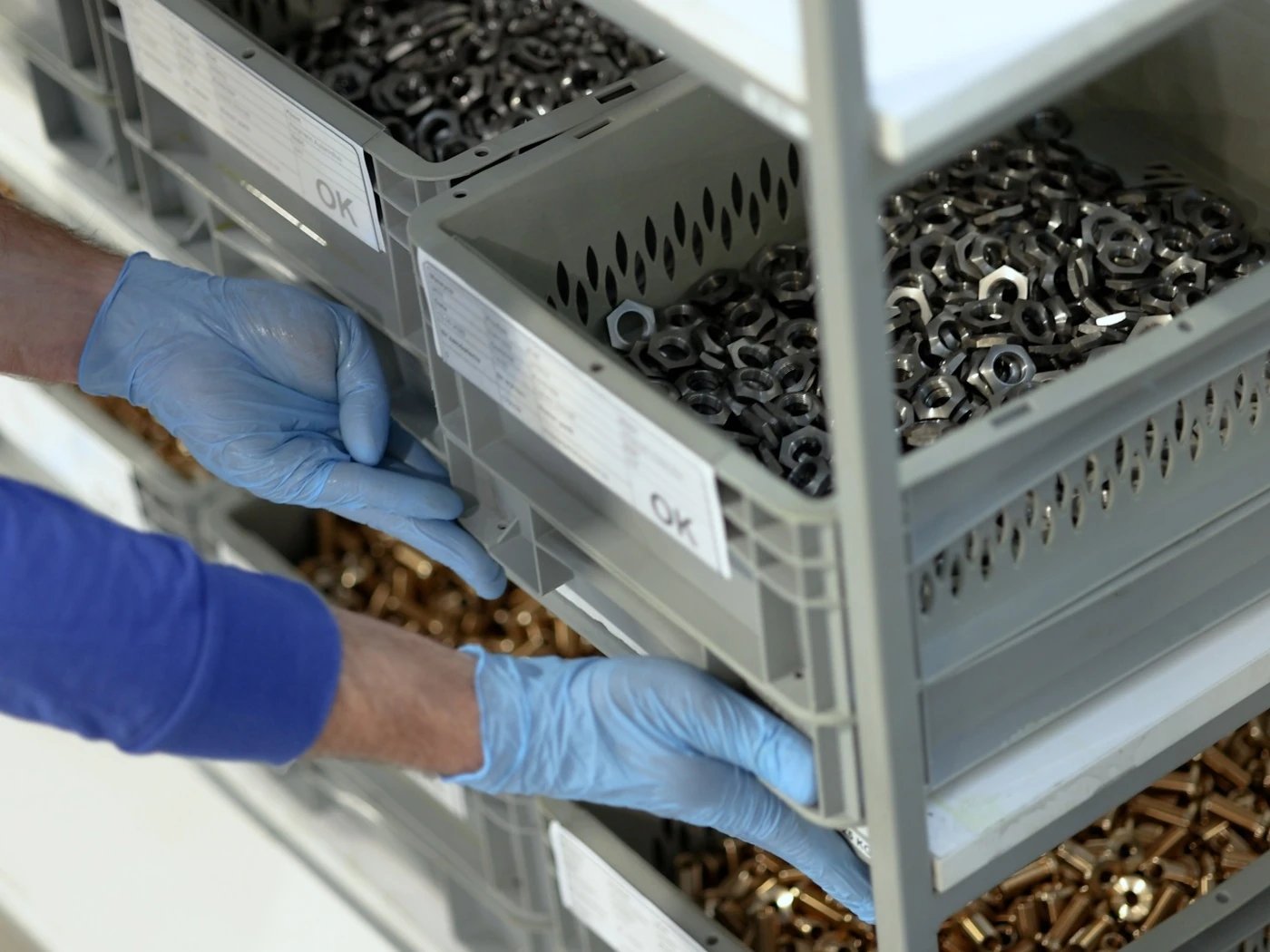
Metal parts manufactured from different materials at SABNER

Quality in Series Production

Quality control is an integral part of the process, from project preparation to the release of the finished batch. Once requirements are agreed, quality-critical characteristics are identified and an inspection method is defined. The process includes verification of incoming material, a First-Off inspection before series production begins, in-process inspections, and final batch inspection. SABNER operates in accordance with the ISO 9001 and ISO 14001 management systems, which support process organization, documentation control, and production repeatability.

ISO 9001ISO 14001

The scope of measurements and quality documentation is tailored to the requirements of each project. For agreed orders, we can provide measurement reports, 3.1 material certificates, batch traceability, and additional quality documentation specified by the customer, including – where required by the project – RoHS/REACH declarations, FAI documentation, or PPAP documentation. This does not mean a single fixed document package or 100% inspection for all parts; inspection frequency, reporting scope, and required records are defined for each project.
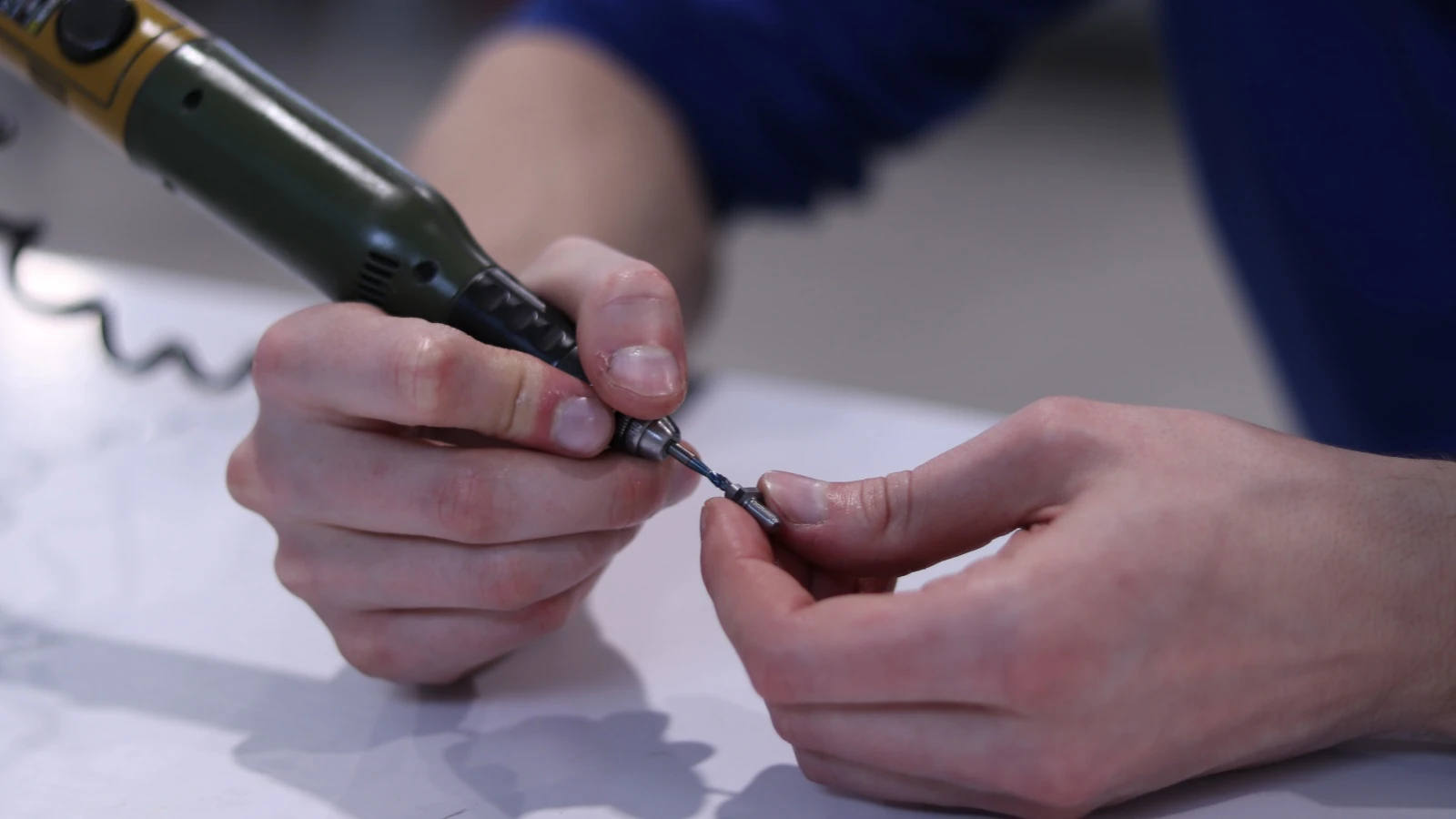
Inspection of a small precision metal part at SABNER

What should be submitted for project evaluation and quotation?

The more complete the input data, the easier it is to assess part feasibility, select the appropriate process, and prepare a quote that reflects the actual project requirements. For an initial review, it is best to submit:

  • 2D technical drawing in PDF format,
  • if available – a 3D model, e.g., STEP or IGES,
  • information on material and quality requirements,
  • planned annual demand and expected batch size,
  • other requirements relevant to the part evaluation, e.g., expected launch date, packaging method, or required quality documentation.

A 2D drawing in PDF format is the primary source of technical requirements. A 3D model in STEP or IGES format can facilitate geometric analysis but does not replace information on tolerances, material, and other requirements specified in the documentation. If complete documentation is not yet available, a sample of the existing part or an additional specification may also be helpful for an initial discussion.

Frequently Asked Questions About Small Metal Parts Production

What Is the Minimum Annual Demand?

SABNER focuses on series-production and recurring projects. The minimum annual demand for this offer is 10,000 pieces per year per component. At higher volumes, process setup costs can be spread across a larger number of parts, which is why long-term and recurring projects are the best fit for our production profile. Samples or small batches may be produced as part of project validation leading to series production.

Do you manufacture custom parts based on technical drawings?

Yes. Production is carried out according to customer documentation and requirements. The initial assessment is usually based on a 2D drawing, and a 3D model, technical specification, or approved sample may supplement the data needed for analysis. Before quoting, we review the geometry, material, quality requirements, and planned volume.

Do You Produce an Initial Test Batch Before Full Production Launch?

Yes, if the project requires this type of validation. Once the process is prepared, a First-Off part is produced and, where appropriate, samples or a validation batch are also produced. Their purpose is to confirm the agreed requirements before moving to full series production.

What materials do you machine?

We most commonly machine stainless steel, titanium, and brass, and depending on the project, we also machine aluminum, free-cutting and structural steels, as well as selected specialty materials. The specific grade is assessed based on the documentation, part geometry, quality requirements, and material availability.

How do you control the quality of the parts you produce?

The process includes incoming material inspection, First-Off inspection, in-process inspections, final inspection, and batch release. The detailed scope of measurements, inspection frequency, and quality documentation are agreed for each project. For selected orders, we can provide, among other things, measurement reports, 3.1 material certificates, and batch traceability.

Submit Your Project for a Quote

If you need series production of small precision metal components, please submit part documentation along with information about the material and planned annual demand. Based on this information, SABNER can begin a feasibility analysis, clarify requirements, and prepare a quote tailored to the specific project.