
Production of Special Alloy Parts
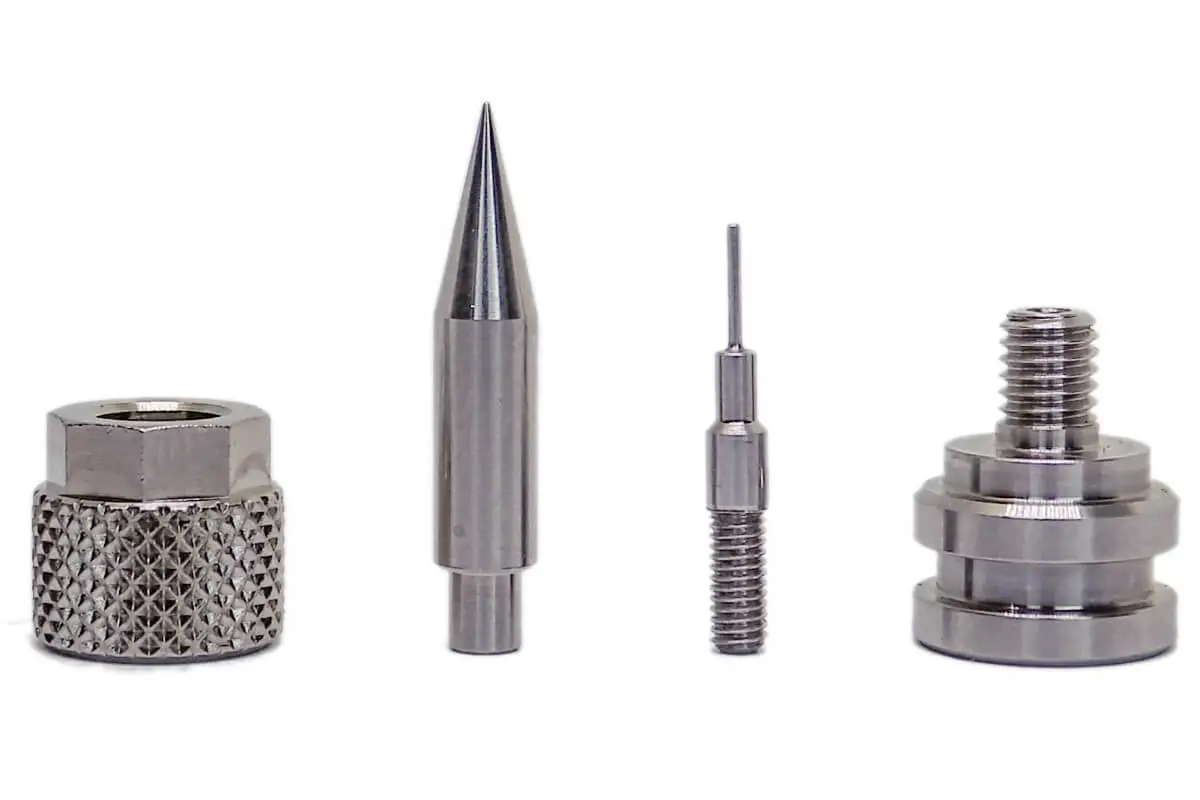
SABNER produces small, precision CNC-turned parts in series from selected special alloys, including materials from the INCONEL, NIMONIC, MONEL, and AMPCO groups. The typical production range covers diameters of Ø0.5-12 mm and lengths of 1-150 mm, with a minimum annual demand of 10,000 pieces per year per component.
With special alloys, the material name alone is not sufficient to confirm the feasibility of manufacturing a part. Each project is analyzed taking into account the part’s geometry, tolerances, quality requirements, measurement methods, and planned volume.
Is a special alloy project a good fit for SABNER?
SABNER specializes in series production of small, precision parts from bar stock using CNC turning according to customer documentation. A project is a good candidate for analysis when the part geometry is suitable for turning and the demand is recurring and intended for series production.
SABNER’s typical dimensional range is Ø0.5-12 mm and lengths of 1-150 mm. The minimum annual demand is 10,000 pieces per year per component. These are important preliminary criteria, but they do not automatically confirm feasibility. In the case of special alloys, the required tolerances, critical features, functional surfaces, inspection methods, and availability of suitable stock material are also important.
In practice, this means that a part should be evaluated as an element of the entire series-production process. What matters is not only whether a single piece can be manufactured, but also whether a repeatable production, inspection, and delivery process can be established in accordance with the project requirements. Therefore, when evaluating an inquiry, SABNER compares the material with the part’s geometry, drawing requirements, and planned volume.
If the project fits this profile, the next step is to analyze the documentation. SABNER evaluates the part in the context of a series-production process, rather than as a single machining operation. You can read more about the technology and production profile on the Precision CNC Turning for Series Production page.
What special alloys does SABNER process?
SABNER’s material range covers several different alloy families. Therefore, on this page, we use the term special alloys as a broad category, but we do not refer to all materials as steels or superalloys. This allows us to maintain correct nomenclature while clearly identifying the materials currently included in SABNER’s offering and communications.
It is advisable to specify the exact grade designation in your inquiry. A general name, such as “Inconel,” describes a family of materials, but to analyze a specific part, we need to know which alloy the part is to be made of. The same applies to material numbers and trade names. Specifying the exact material designation reduces the risk of misunderstandings as early as the feasibility assessment and quotation preparation stages.
Nickel and nickel-copper alloys
Confirmed materials include:
- INCONEL 718 / 2.4668 / NiCr19Fe19NbMo
- INCONEL 625 / 2.4856
- NIMONIC 75 / 2.4630 / NiCr20TiAl
- 2.4631 / NiCr20TiAlMn
- MONEL 400 / 2.4360 / NiCu30Fe
INCONEL 718, INCONEL 625, NIMONIC 75, and material 2.4631 belong to the group of nickel-based alloys, while MONEL 400 is a nickel-copper alloy. This distinction is important because not all materials listed on the website should be described using a single simplified term.
From an ordering perspective, however, what matters most is not the general application of a given alloy, but its specific designation in the part documentation and the technical requirements of the project. SABNER does not automatically assign a specific end use to a material and does not assume that every geometry made from the listed alloy can be manufactured.
The verification process covers the combination of material, dimensions, tolerances, surface requirements, inspection methods, and the anticipated production volume. This ensures that the assessment is based on the actual part and the planned process, rather than on the alloy name alone.
Special AMPCO Aluminum Bronzes
The special materials used by SABNER also include AMPCO 21, AMPCO 22, AMPCO 25, and AMPCO 26. These are aluminum bronzes, which is why they are listed separately from nickel and nickel-copper alloys.
This distinction also has practical significance for website users. The trade name or material number should be specified as precisely as possible in the inquiry, since different alloy families require individual technical assessments and may affect process preparation, inspection methods, and material planning.
AMPCO remains on this page because SABNER includes these materials in its group of special materials. At the same time, we do not classify them as steels or nickel alloys. Proper separation of material families facilitates the preparation of documentation and technical discussions prior to project launch.
Other Selected Special Steels and Alloys
The list of grades provided is not an exhaustive catalog of all materials that may be considered for a project. SABNER also works with selected special steels, difficult-to-machine materials, and other alloys requiring a customized technological approach.
If your specific grade is not on the list, this does not automatically mean the project is out of scope. A precise material designation, along with part documentation, is required for analysis. The feasibility of manufacturing a specific grade is confirmed following a technical analysis, without making any prior assumptions about material availability or geometric feasibility.
This approach allows us to handle non-standard projects without creating an artificially broad list of alloys. For the customer, what matters more than a long catalog is the answer to the question of whether a specific material, a specific geometry, and a specific volume can be combined into a stable series-production process.
Why does a special material require an individual analysis?
In the series production of parts made from special alloys, the material is only one element of the feasibility assessment. Two parts made from the same alloy may have completely different technological requirements if they differ in diameter, length, geometric proportions, tolerances, functional surfaces, or inspection methods.
That is why SABNER analyzes the project as a whole. The following factors are particularly important:
- precise material designation and stock material,
- part geometry and dimensional range,
- tolerances and critical dimensions,
- requirements regarding surfaces and functional characteristics,
- measurement method and quality requirements,
- planned quantity and annual volume.
This approach prevents situations where a production decision is based solely on the alloy name. For materials requiring a customized technological approach, it is particularly important to link the material to the actual part geometry and the repeatability of the series-production process.
Annual volume is also significant. SABNER operates primarily on a series-production model, and a larger, repeatable volume justifies the preparation and stabilization of the production process. In line with the company’s profile, the higher the annual demand, the more favorable the production economics and unit costs can generally be. However, this does not determine pricing automatically, as the price always depends on the entire project.
SABNER does not specify a particular tolerance, lead time, or price in advance without analyzing the documentation. These elements are determined by the actual project requirements and are established during the inquiry qualification and quotation preparation stages.
Scope of Series Production of Special Alloy Parts
SABNER specializes in small, precision CNC-turned parts from bar stock. The typical production range covers diameters of Ø0.5-12 mm and lengths of 1-150 mm. The company operates on a B2B model focused on recurring series-production demand, with a minimum annual demand of 10,000 pieces per year per component.
In practice, this means that SABNER does not position this offering as a service for single pieces or short runs that are an end in themselves. Samples or small batches may occur during the process, but they serve to validate the solution before launching full series production.
The dimensional range and volume help quickly assess whether it is worth initiating an analysis, but the final decision depends on the documentation. The project may require an evaluation of critical features, the ability to maintain dimensional stability, inspection methods, and the organization of materials and deliveries.
In the case of special alloys, it is also important that the material requirements are consistent with the drawing and other documentation. If the customer uses a trade name, material number, and composition description simultaneously, these details should unambiguously identify the same required material. Any discrepancies should be clarified before production begins.
If you’d like to learn more about how small parts are manufactured from bar stock, visit the page Precision CNC Turning for Series Production. The page on special alloys, on the other hand, focuses on situations where the material is one of the main criteria for selecting a supplier and preparing the process.
What does the launch of a special alloy project look like?
The process begins with qualifying the inquiry and conducting a feasibility analysis. At this stage, SABNER reviews the part documentation, material, technical requirements, and planned volume. The goal is to assess whether the project fits our production profile and to identify which elements need to be clarified before preparing a quote.
Once the scope has been agreed upon and the order accepted, the production process is prepared. This involves clarifying requirements, securing the appropriate material, preparing the manufacturing process, and establishing methods for inspecting characteristics critical to the project.
If required, samples may be produced or a First-Off stage carried out before full series production. They confirm that the part and process meet the agreed requirements before series production starts. Samples are not a separate prototyping service; they are part of the series-production project. Read more about this stage on the Validation Samples Before Series Production.
Once the validation results are approved, the process moves on to series production and repeatable inspection in accordance with the established plan. If questions regarding the material, documentation, or inspection methods arise during project preparation, they should be resolved before regular deliveries begin.
Quality Control and Material Traceability
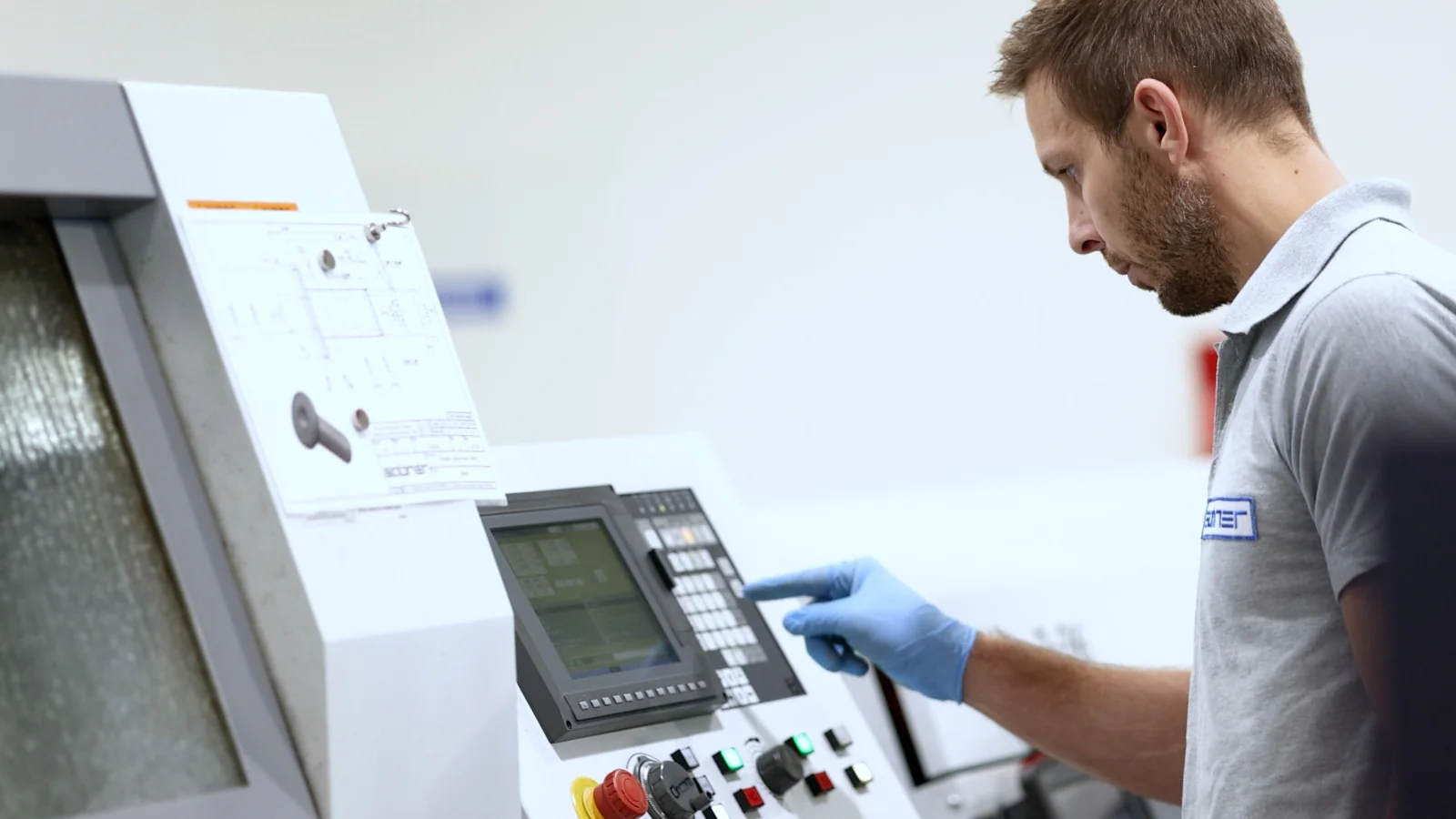
In projects involving special alloys, it is not only the dimensional accuracy of the parts that is important, but also a controlled transition from material receipt to the finished part. SABNER implements a quality process that includes traceability of received material, incoming inspection, approval of the first part, in-process inspections, and final inspection.
The scope of measurements and documentation depends on the requirements of the specific project. Therefore, it is advisable to specify critical characteristics, inspection requirements, and the documents to accompany deliveries as early as the inquiry stage. This allows these requirements to be taken into account during the feasibility analysis and process preparation.
For the customer, this means that quality requirements should be treated as part of the input data, rather than as an add-on determined only after the part has been manufactured. If a project requires a specific method of material verification, additional documentation, or a special inspection plan, this information should be included in the inquiry.
Detailed information about the system and our approach to quality control can be found on the Quality page.
What should you submit for a quote on special alloy parts?
The more precise the input data, the more efficiently the project can be evaluated. It is recommended to include the following in your inquiry:
- a 2D drawing, 3D model, or agreed-upon part specification,
- precise material designation, preferably including the material number or the full designation required in the documentation,
- planned quantity and annual demand for the component,
- tolerances and critical dimensions,
- requirements regarding surface finish, inspection, and quality documentation,
- other technical requirements that may affect the production or acceptance of the part.
If some of the data has not yet been specified, the inquiry can still be reviewed. In such cases, SABNER will indicate what information needs to be provided to confirm manufacturability and prepare a quote.
For materials not listed on this page, it is particularly important to specify the grade accurately. This helps avoid ambiguity between the trade name, material number, and the requirements specified in the drawing.
The annual project volume is one of the basic qualification criteria; therefore, information regarding the volume should be provided as early as possible. This ensures that the analysis is based on a realistic series-production model from the outset.
Frequently Asked Questions About Special Alloy Parts
What special alloys does SABNER process?
The current material range includes, among others, INCONEL 718, INCONEL 625, NIMONIC 75, material 2.4631, MONEL 400, and AMPCO 21, 22, 25, and 26 aluminum bronzes. SABNER also evaluates other selected steels and special alloys, but the feasibility of producing a specific grade is confirmed based on the project documentation.
Does SABNER help select the right material for an application?
SABNER can analyze project requirements and discuss material selection in the context of manufacturing technology, part geometry, and expected performance parameters. Final material approval must be consistent with the customer’s documentation and the specific application requirements.
Can you suggest an alternative alloy with similar properties?
The feasibility of using an alternative material can be analyzed if dictated by the project’s needs. However, any material change requires explicit approval prior to production and should not be implemented solely based on a similar name or the alloy’s general properties.
Part Documentation for Analysis
If you are planning series production of a small, precision part made of a special alloy, the analysis requires documentation, the exact material designation, and the planned demand. SABNER will assess the project’s suitability for series-production CNC turning and determine what information is needed to prepare a quote.
The best starting point is a 2D drawing or 3D model, along with information on the material, key tolerances, and the projected annual volume. Based on this, we can begin a feasibility analysis and determine the next steps in the project.