
Manufacturing Titanium and Titanium Alloy Parts
SABNER manufactures small precision parts from titanium and selected titanium alloys in series using CNC bar turning. We manufacture parts according to customer documentation, following a preliminary feasibility analysis of the project. Our typical production range includes diameters of Ø0.5-12 mm, lengths of 1-150 mm, and projects starting at 10,000 pieces per year per component.
If you are looking for a supplier for repeatable B2B production, please send us a drawing or specification. Based on this, we will evaluate the material, geometry, required tolerances, volume, and production process.
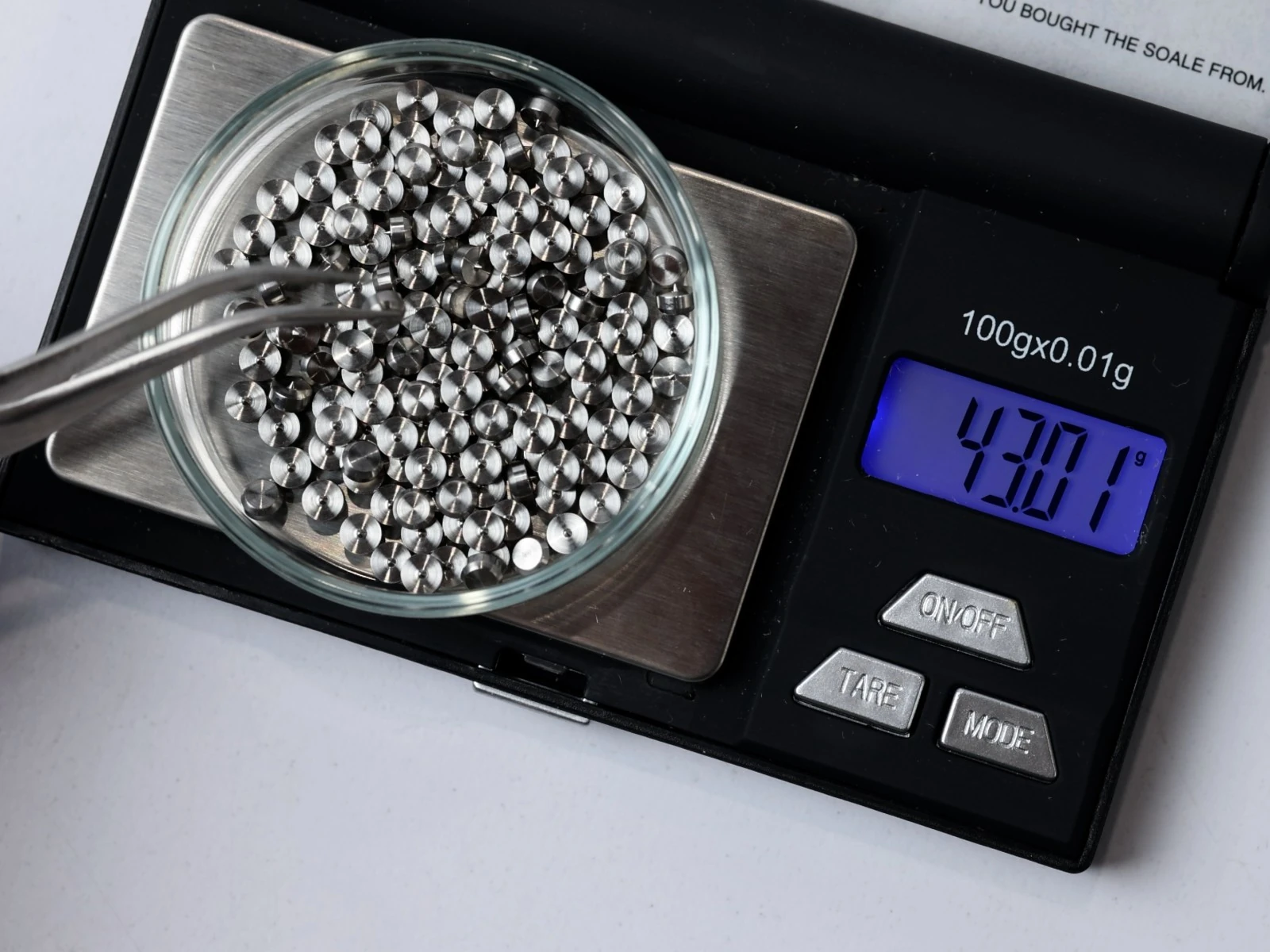
CNC Turning of Titanium Parts – When Is a Project a Good Fit for SABNER?
We are best suited for small parts produced in series from bar stock whose geometry and requirements can be consistently achieved through the CNC turning process. This applies, among other things, to bushings, pins, pivot pins, shafts, inserts, threaded components, and other axial and complex turned parts, provided they fall within the scope of our technology.
The decision is not based on the material name alone. We analyze the entire project: the part’s geometry, length, and diameter; tolerances; critical features; surface quality; material; planned volume; and quality requirements. We confirm the feasibility of a specific part only after analyzing the documentation.
We describe our full range of technologies on the page Precision CNC Turning for Series Production. For projects well-suited to production from bar stock, we also utilize solutions specific to CNC sliding-headstock turning.
What Is Important When CNC Machining Titanium?
Titanium and its alloys are valued, among other things, for their favorable strength-to-weight ratio and corrosion resistance. At the same time, they require a controlled machining approach. Titanium’s low thermal conductivity hinders heat dissipation from the cutting zone, and its reactivity and tendency to work harden during machining can increase the load on the tool.
In practice, series CNC turning of titanium requires attention not only to the nominal dimensions of the parts, but also to process stability, tool and parameter selection, cooling methods, process control, and the measurement plan. From the customer’s perspective, the most important factor is that the technology be designed for a specific geometry and volume and then maintained across subsequent batches.
Does SABNER perform titanium milling?
SABNER does not offer CNC milling as a standalone service. Our core production technology is CNC turning of small parts from bar stock. If you are looking for “CNC machining of titanium” in the broad sense, it is worth first checking whether the part is a turned component and whether its geometry fits our production profile.
Titanium and Titanium Alloys in SABNER’s Production
Various grades of titanium and titanium alloys may be used in projects carried out by SABNER. TiAl5Sn2 and TiAl6V4 are examples of such materials, but this list is not exhaustive. If your project calls for a different grade, please provide its designation along with the part’s documentation. We will assess manufacturability as part of the feasibility analysis.
TiAl6V4
TiAl6V4 is a widely used titanium alloy that combines high strength, low weight, and corrosion resistance. However, in the production of turned parts, it is not only the material grade itself that matters, but also the condition of the blank, the part’s geometry, dimensional requirements, and the expected repeatability of the production run. That is why we always evaluate the material in conjunction with the complete project.
TiAl5Sn2
TiAl5Sn2 is another example of a titanium alloy that may be relevant to a project involving a turned part for series production. The material designation alone does not determine whether a specific part can be manufactured. We need information about the material form, part dimensions, required tolerances, functional surfaces, and production volume.
If you’re unsure whether the specified material falls within our scope, you don’t need to adapt the project on your own. Submit your documentation for analysis – we’ll verify the material and geometry as a single manufacturing project.
For which industries does SABNER manufacture precision parts?
SABNER carries out series-production B2B projects for industries where dimensional repeatability, process stability, compliance with documentation, and quality control are critical. These include, among others, the medical and dental industries, electronics and electrical engineering, the automotive industry, hydraulics and pneumatics, aerospace, as well as the machinery industry and automation. However, in the case of a titanium project, the industry itself does not determine feasibility. The material, geometry, tolerances, quality requirements, and volume are evaluated collectively during the documentation analysis.
Medical and Dental
We manufacture small metal components for medical and dental applications according to customer documentation. In such projects, consistent geometry, surface quality, the right material, and process control are essential. Titanium may be considered when a project requires, among other things, low weight, corrosion resistance, or material properties suitable for a specific application. However, we evaluate each part individually. See also medical and dental parts.
Aviation
SABNER has experience in executing demanding projects for the aviation industry. In this category of projects, material selection, process repeatability, compliance with technical documentation, and requirements traceability are of particular importance. For titanium parts, we do not assign a part to a specific end use without information from the customer – we evaluate it as a technological project based on the documentation. For more information, visit the precision aerospace parts page.
Automotive
In the automotive industry, SABNER carries out series-production projects where dimensional stability, quality control, and the ability to produce subsequent batches over the long term are key. If the documentation specifies titanium or a titanium alloy, we verify its suitability for the part’s geometry, production from bar stock, and the required volume. See precision automotive parts.
Electronics and Electrical Engineering
For the electronics and electrical engineering sectors, we manufacture small components such as pins, sleeves, inserts, and assembly components produced according to customer documentation. Projects of this type primarily require consistent dimensions, stable geometry, and controlled surface quality. If titanium is specified for a particular project, we evaluate its suitability in conjunction with the part’s functional requirements. See precision electronic parts.
Hydraulics and Pneumatics
SABNER manufactures fittings, adapters, threaded elements, and other small technical components for hydraulic and pneumatic systems. In such parts, threads, bores, sealing surfaces, and geometric repeatability can be critical. A project specifying titanium requires a separate evaluation of the material, geometry, and functional requirements. See precision hydraulic parts and precision pneumatic parts.
Machinery and Automation
For machines, equipment, and automation systems, we manufacture, among other things, sleeves, shafts, pins, spacers, and special components. These are projects where the fit of parts to a specific assembly, repeatability of parameters, and stable series production are crucial. If the design requires titanium, we analyze the possibility of manufacturing the parts as part of our CNC bar turning services. We showcase a wider range of such components on the precision parts page.
Don’t see your industry on the list? The list is not exhaustive. Send us a drawing or model along with the material specification and planned volume. We’ll assess the project’s feasibility based on its actual requirements, not just the industry name.
From Documentation to Series Production of Titanium Parts
Series production begins with an analysis of requirements, not with starting up the machine. For titanium parts, it is essential to integrate material data, geometry, tolerances, and planned volume into a single, stable process. A typical project workflow includes:
Documentation and requirements. We receive a drawing, model, or specification, along with information on the material, volume, and quality requirements.
Feasibility analysis. We assess whether the part is suitable for CNC bar turning and which project elements are critical for stable production.
Material and process preparation. We establish the manufacturing assumptions, production method, and an inspection plan appropriate for the project.
First-Off and validation. If the project or the customer requires it, the first parts or samples are used to confirm dimensions and agreed requirements before moving to regular production.
Series production. Once the process is approved, we produce subsequent batches in accordance with the established project requirements.
Inspection and batch release. Inspection results confirm the parts’ compliance prior to shipment in accordance with the agreed quality scope.
If the project requires parts to be approved before starting regular series production, see how we handle validation samples prior to series production. These are part of the series production implementation and not a separate one-off production service.
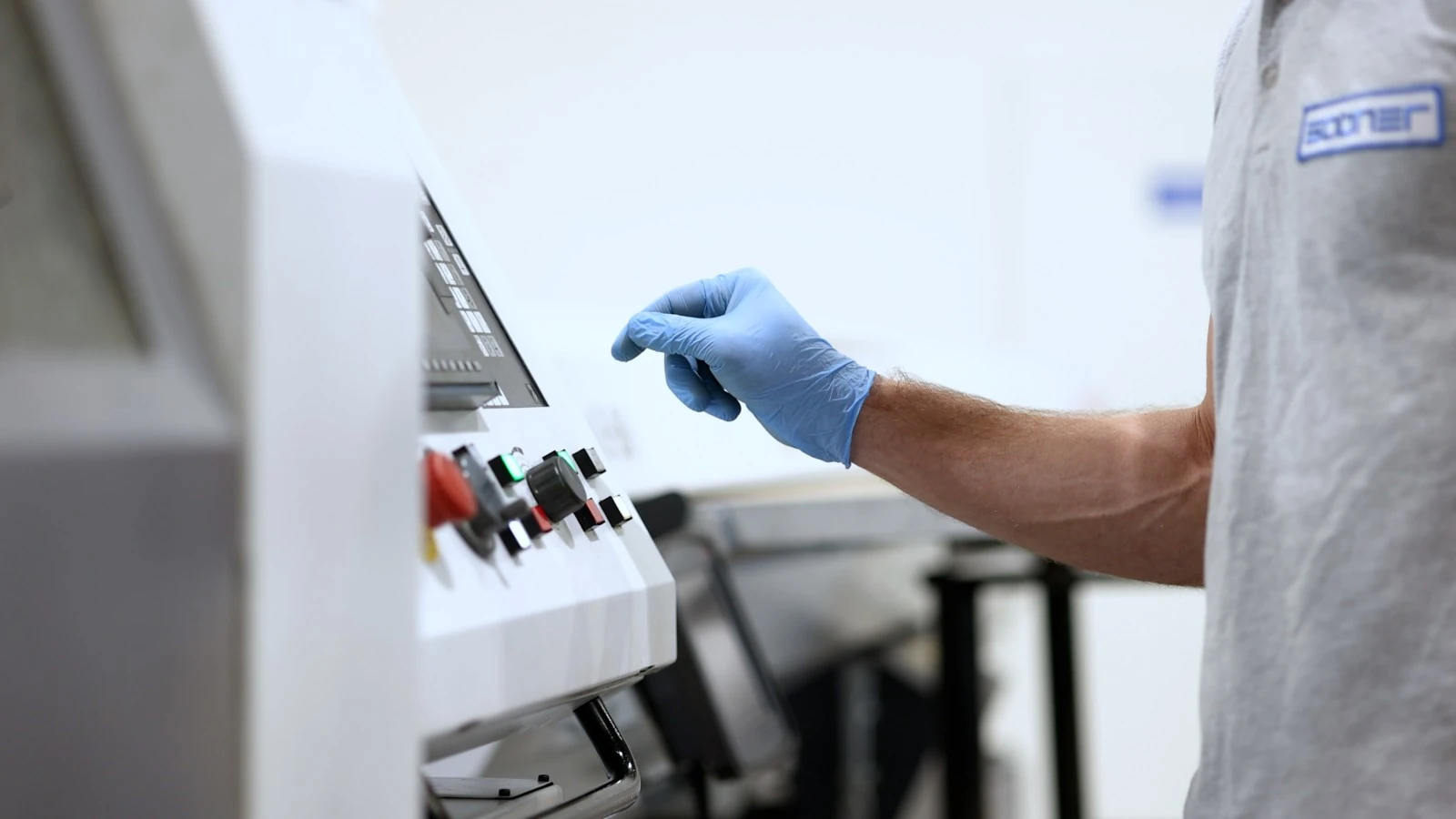
Quality Control of Titanium Parts
In series production of titanium parts, mere compliance of the first part with the drawing is not sufficient. The goal is to maintain the required parameters in subsequent batches as well. Therefore, quality control is linked to process preparation and the requirements of the specific project.
Depending on the project, this may include inspection of incoming materials, identification of critical features, an inspection plan, inspection of the first parts, in-process measurements, and final inspection prior to batch release. We determine the scope of documentation and inspections based on the customer’s requirements.
You can find more about our approach to planning and maintaining quality in series production on the Quality at SABNER page.
What should you send for a quote on titanium parts?
To accurately evaluate a project, we primarily need technical information that allows us to assess the material, geometry, and expected volume together. The more complete the input documentation, the fewer assumptions we need to make during the analysis phase.
- 2D technical drawing with dimensions, tolerances, and material designation.
- 3D model if available and if it helps to unambiguously describe the geometry.
- Titanium grade or titanium alloy and any additional material requirements, if specified in the project.
- Planned annual volume and typical batch ordering pattern.
- Critical requirements such as specific tolerances, functional surfaces, surface roughness, quality requirements, packaging, or other conditions relevant to the application.
Based on this information, we can assess technological feasibility, the scope of required validation, and the project’s fit with our series-production model.
Related Manufacturing Capabilities
If you’d like to explore the broader technological context first, visit the precision CNC turning for series production page or the page on CNC sliding-headstock turning. For projects where the type of part is important, the pages on turned parts, precision parts, and small metal parts manufacturing may also be helpful.
If your project involves a different base material, see also stainless steel parts manufacturing and brass parts manufacturing. You’ll find a complete overview in the Services and Products sections.
FAQ – Titanium Parts Manufacturing
What titanium alloys does SABNER machine?
SABNER manufactures parts from titanium and selected titanium alloys. TiAl5Sn2 and TiAl6V4 are examples, but this is not an exhaustive list of materials. We confirm the feasibility of a specific grade and part after analyzing the documentation, geometry, and project requirements.
What tolerances can be achieved for titanium parts?
We do not apply a single universal tolerance value to all titanium parts. The possible range depends, among other things, on the geometry, nominal dimension, material, critical features, and inspection conditions. We confirm tolerances for a specific project after analyzing the drawing.
Can validation samples be produced before series production?
Yes, if required by the customer or the nature of the project. Samples, a First-Off, or a validation batch can be used to confirm dimensions and process parameters before launching regular production. However, these are not positioned as a standalone prototyping or short-run production service.
From what annual volume does SABNER undertake series-production projects?
The basic requirement is a minimum of 10,000 pieces per year per component. The larger and more consistent the volume, the easier it is to benefit from the economics of a stable series-production process. We determine the specific delivery model and batch size on a project-by-project basis.
For more information on materials, tolerances, documentation, quality, and B2B collaboration, see the SABNER FAQ.
Do you have documentation for a titanium part?
Send us a drawing, model, or specification along with information about the material and planned volume. We’ll check whether the part is suitable for CNC turning for series production at SABNER and what conditions need to be considered before starting production.